
Getting Website Traffic but No Sales? Your Ads Might Not Be the Problem!
Getting website traffic but no sales? Discover how landing pages, user experience, website speed, and conversion tracking affect your results—and what to improve before increasing your advertising budget.

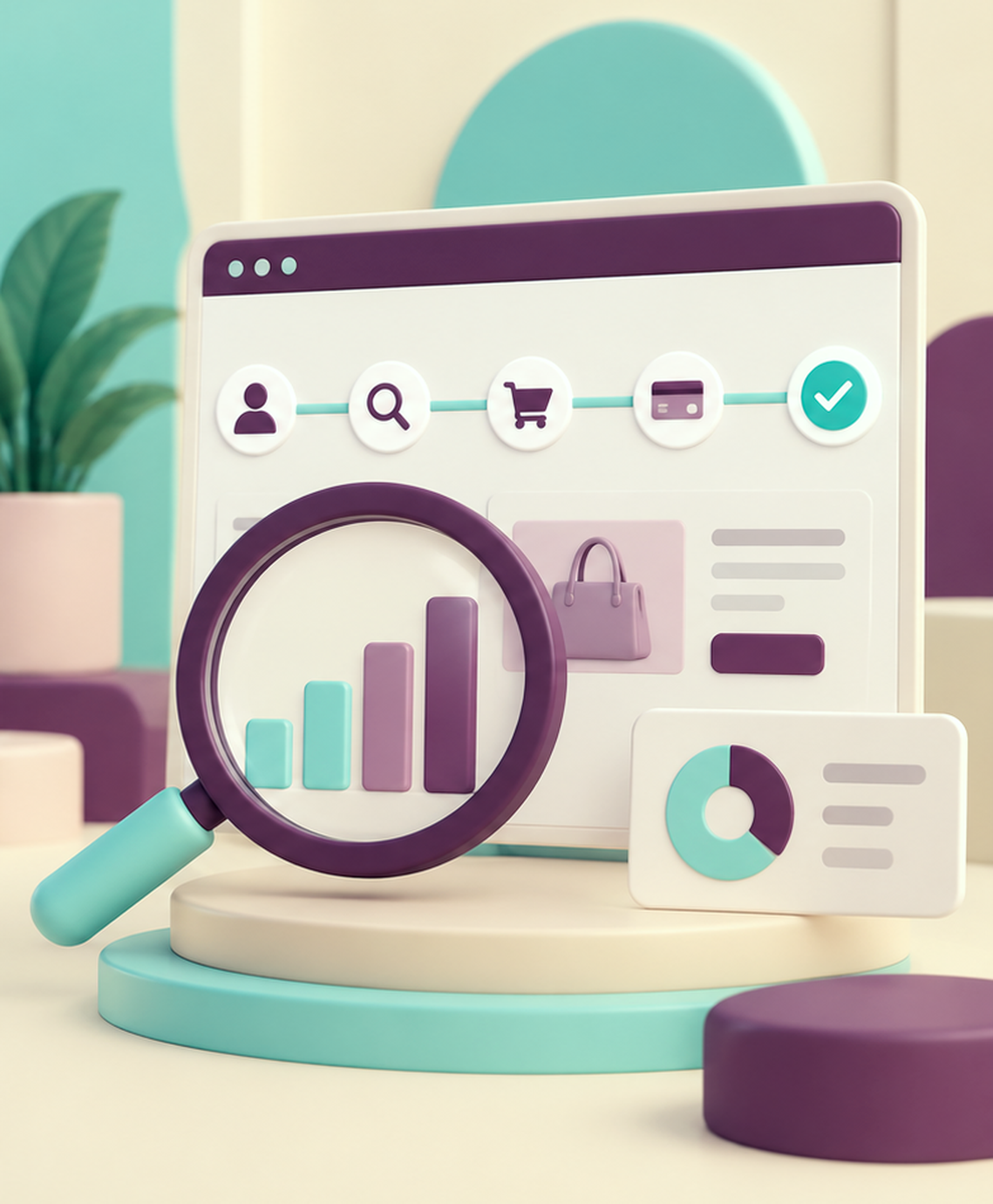
You're spending money on Google Ads or social media advertising, and your website traffic is increasing, but your sales or customer inquiries aren't meeting your expectations.
Your first reaction might be to change the advertisement, target a different audience, or increase your advertising budget in the hope of improving results.
But sometimes, the problem isn't the advertisement itself. The real issue begins after a potential customer clicks your ad and visits your website.
The purpose of advertising is to attract the right customers, but your website and the shopping or browsing experience help them take the next step.
1. Are Your Ads Reaching the Right Customers?
Not every website visitor is ready to make a purchase.
Your advertisement might generate a large number of clicks because it's attractive, but it could be reaching people who are simply looking for general information rather than those who are ready to purchase a product or request a service.
That's why it's important to evaluate the quality of your website traffic, not just the number of visits.
Ask yourself:
Are your search keywords actually related to purchasing intent?
Are your advertisements reaching the right audience?
Are visitors interacting with your content, or are they leaving without taking any action?
The goal isn't to generate the highest number of visits. It's to attract people who are more likely to become customers.
2. Does Your Landing Page Deliver What Your Advertisement Promises?
One of the most common mistakes is promoting a specific service or offer in an advertisement but directing visitors to the website's homepage instead of the relevant service or offer page.
In this situation, customers have to search again for the information they originally clicked to find, and they may leave the website before reaching it.
For example, if your advertisement promotes e-commerce website development, visitors should land on a dedicated page explaining the service, its benefits, examples of previous projects, and how to request a quotation.
This is much more effective than forcing potential customers to navigate through your entire website.
Google also recommends ensuring that landing pages are relevant to advertisement content and easy to navigate.
3. Is Your Website Helping Customers Make Decisions?
An attractive website design alone isn't enough.
Visitors need to quickly understand what your business offers, why they should choose you, and what action they should take next.
Review the following elements on your website:
Does the page headline clearly explain your product or service at first glance?
Is there a clear button to purchase, request a quotation, or contact your business?
Are prices, benefits, and important information easy to find?
Does your website display previous projects or genuine customer reviews that help build trust?
Is the mobile experience convenient, or are buttons and forms difficult to use?
Every unnecessary step or missing piece of information can cause potential customers to hesitate before making a decision.
4. Could Website Speed or Mobile Experience Be the Problem?
Your advertisement might be excellent, and your targeting might be accurate, but your website itself could be slow or difficult to navigate.
For example, a potential customer clicks on your advertisement using their smartphone, but the page takes too long to load, the elements appear disorganized, or the contact button doesn't work properly.
In these situations, the issue isn't necessarily the quality of your advertising campaign.
Test your landing pages using Google's PageSpeed Insights and review the experience yourself on different devices.
Most importantly, focus on fixing problems that genuinely affect your visitors rather than simply trying to achieve a perfect website speed score.
5. Are You Measuring Actual Sales or Just Clicks?
One of the most important problems is that some businesses evaluate advertising success based only on website traffic or clicks on a WhatsApp button.
However, clicking a WhatsApp button doesn't necessarily mean the visitor sent a message, and sending a message doesn't necessarily mean a purchase was completed.
It's essential to distinguish between the different stages of the customer journey:
Website Visit → Page Engagement → Inquiry or Purchase Request → Qualified Lead → Completed Sale
Using tools such as Google Analytics 4 (GA4), you can track user engagement and conversions and identify where potential customers are leaving the process.
If your business relies on customer inquiries or sales completed outside your website, connecting lead information with your sales team's actual results can help you evaluate advertising quality more accurately.
How Can You Identify the Problem Before Increasing Your Advertising Budget?
Start by reviewing the entire customer journey instead of making random changes to your advertising campaigns.
If your advertisements generate traffic but visitors don't interact with your website, review your audience targeting and landing pages.
If customers view products but rarely add them to their shopping carts, review your product presentation, pricing, and the information available on each product page.
If customers add products to their carts but don't complete their purchases, investigate the checkout process, shipping costs, payment methods, and any additional charges that appear unexpectedly.
If your business receives many inquiries but generates few sales, evaluate the quality of those leads, your team's response time, how prices are presented, and how effectively your sales team communicates with potential customers.
The important thing is to identify the source of the problem using data and testing rather than relying on assumptions.
Conclusion: Review the Customer Journey Before Increasing Your Advertising Budget
Successful digital marketing doesn't end when someone clicks an advertisement.
Your advertisements, landing pages, user experience, website speed, and customer communication are all connected parts of the same journey.
A website that isn't generating enough sales doesn't necessarily need a complete redesign, and poor results don't automatically mean your advertising campaigns are failing.
Sometimes, a simple improvement to a landing page or a clearer presentation of your services can make a meaningful difference. However, the right decision should always begin with understanding your data.
At ONDM, we focus on connecting digital marketing, website development, and user experience to ensure that every stage of the customer journey supports the business goals of your project.
If your advertisements are generating traffic but delivering fewer results than expected, the right starting point is to review the entire customer journey, from the first advertisement click to the final purchase or customer inquiry.
References and Sources
1. Google Ads – Optimizing Ads and Landing Pages
Google's recommendations for improving advertisement relevance, landing page experience, and campaign performance.
https://support.google.com/google-ads/answer/6238826
2. Google Analytics – Purchase Journey Report
Official Google Analytics documentation explaining how to analyze the customer purchasing journey and identify where potential customers leave the process.
https://support.google.com/analytics/answer/13128171
3. Google – PageSpeed Insights
Official Google documentation explaining how PageSpeed Insights evaluates website performance and provides recommendations for improvement.
Related blogs
View all blogs
Why Do Customers Add Products to Their Cart but Never Complete the Purchase?
Customers adding products to their carts but leaving without buying? Discover the main causes of cart abandonment and practical ways to improve checkout, reduce friction, and recover potential sales.

؟Website Builder or Custom Development
Website builder or custom development? Compare costs, flexibility, maintenance, and scalability to choose the right solution for your business before investing.
AI Customer Service.
Losing potential customers because of slow responses? Discover how AI customer service can answer inquiries, organize leads, improve customer experiences, and support your sales team without replacing human interaction.