
AI Customer Service.
Losing potential customers because of slow responses? Discover how AI customer service can answer inquiries, organize leads, improve customer experiences, and support your sales team without replacing human interaction.
A potential customer visits your website, likes your product or service, and decides to ask about pricing or details before making a purchase.
They send a message through WhatsApp or your website, but the response is delayed. After a while, they may lose interest or start contacting another company.
This happens across many businesses, especially when inquiries increase or customers reach out outside working hours.
That raises an important question: Can artificial intelligence help your business handle inquiries and improve follow-up without losing the human touch?
Yes, provided the system is designed around real customer needs, uses accurate business information, and knows when to transfer the conversation to an employee.
1. Slow Responses Are More Than a Customer Service Problem
When customers send an inquiry, they are often looking for information that will help them take the next step.
They might want to know whether a product is available, how much a service costs, when an order will be delivered, or how to make a booking.
If the question goes unanswered, moving forward becomes more difficult.
However, a delayed inquiry doesn't automatically mean a confirmed sale has been lost. Some customers are comparing options or simply gathering information.
The real problem is that unanswered inquiries make it harder to identify genuinely interested customers and understand what they need to move forward.
That's why improving response times should go hand in hand with better communication and follow-up, rather than simply sending automated messages to everyone.
2. How Can AI Help Respond to Customer Inquiries?
An AI assistant can be integrated into your website or a communication system connected to an appropriate channel, such as WhatsApp Business when the necessary integration is available.
Instead of requiring an employee to handle every simple question, the system can help with:
Answering frequently asked questions about services and business hours.
Explaining product specifications, shipping policies, and return conditions.
Helping visitors find the right product or service page.
Collecting essential information for follow-up with customer consent.
Identifying inquiries that need a specialist.
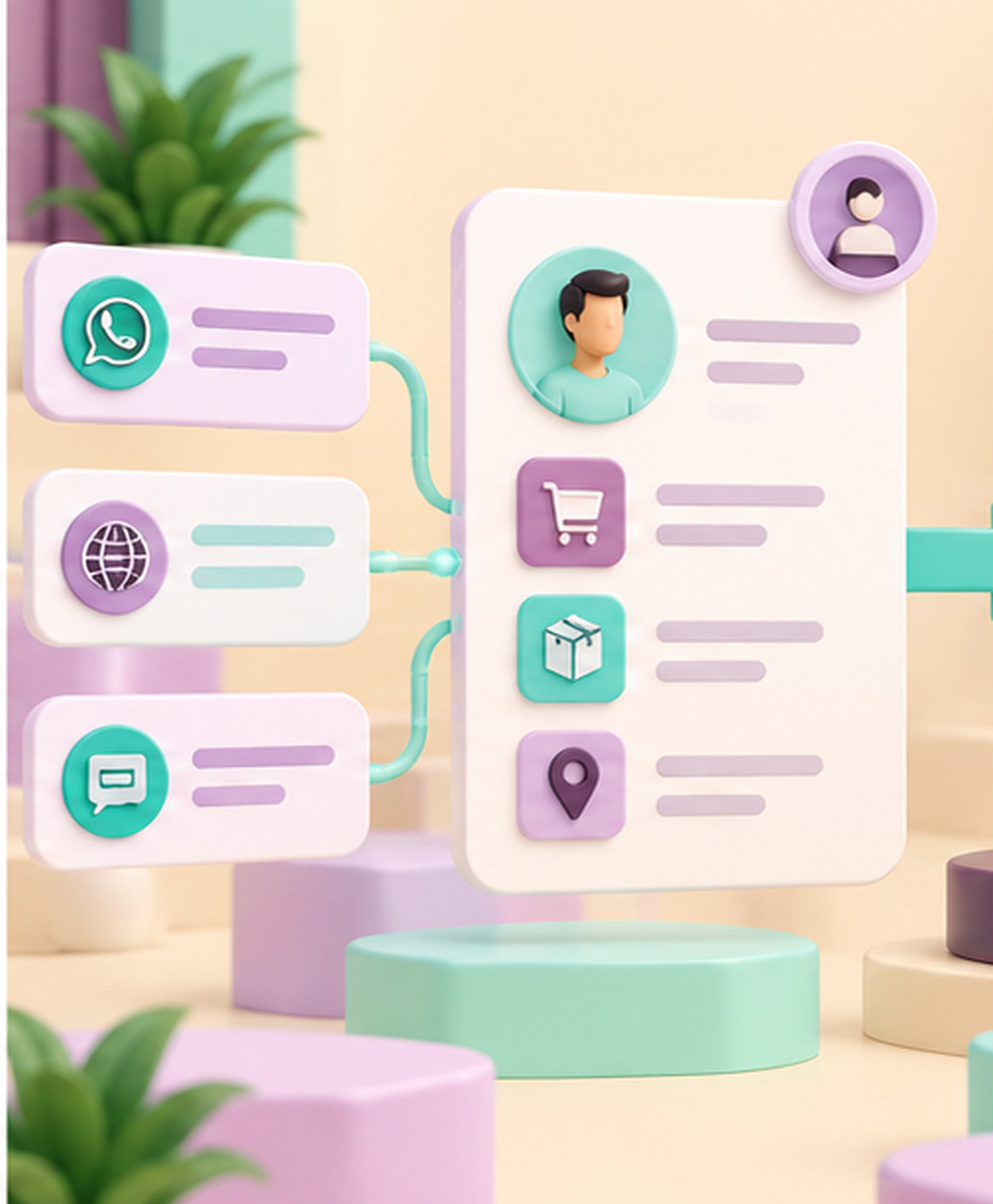
Organizing potential customer information in a CRM system.
For example, a company offering e-commerce website development could use an assistant to ask about the customer's business, whether they already have a store, and which features they need.
The assistant could then send an organized summary to the sales team, instead of making an employee restart the conversation from the beginning.
However, the assistant should never invent prices, delivery deadlines, or commitments that the business hasn't approved.
3. Is a Traditional Chatbot the Same as an AI Assistant?
No. There's an important difference.
A traditional chatbot often relies on predefined questions, menus, and steps, such as:
"Press 1 for pricing or press 2 to track your order."
This can work very well for businesses with straightforward and predictable inquiries.
An AI-powered assistant, on the other hand, can interpret questions written in different ways and use business-provided information to generate relevant responses.
But that flexibility requires testing and supervision. An AI assistant may misunderstand a question or provide inaccurate information.
Businesses don't necessarily have to choose one approach exclusively. A combination of clear menu options, AI conversations, and human assistance may be the best solution.
4. Website or WhatsApp: Where Should You Use an AI Assistant?
The right channel depends on where your customers prefer to communicate.
On your website
A website assistant can help visitors while they're exploring your products or services.
For example, if someone is reviewing a service page but doesn't understand the differences between available packages, they can ask a question immediately instead of leaving to search elsewhere.
The advantage is that communication happens while the visitor is actively considering your business.
On WhatsApp Business
If a large share of your inquiries comes through WhatsApp, you can start with tools such as greeting messages, away messages, and quick replies in the WhatsApp Business app.
More advanced assistants connected to customer records or order management systems may require the WhatsApp Business Platform or another suitable approved solution.
In 2026, Meta has been gradually introducing AI assistants for businesses. However, availability differs by country, business account, and supported language.
Important: Businesses using the WhatsApp Business Platform must follow messaging policies, obtain the necessary permissions, and provide clear paths to human assistance. Outside the 24-hour customer service window, business-initiated messages require approved message templates.
These requirements should be considered before implementing automation.
5. Can AI Turn Customer Inquiries into Sales?
AI doesn't guarantee that every interested customer will make a purchase, but it can help improve the stages leading up to a sales decision.
Consider a digital services company.
A potential customer visits its website and asks:
"I need an online store. Where should I start?"
The assistant can explain the general options, ask about the business and required features, and then direct the customer to request a quotation or speak with a consultant.
If a CRM system is connected, relevant information can be recorded, the inquiry categorized, and the lead assigned to the right employee.
This gives the sales team a clearer starting point and better context for follow-up.
Still, there's no guarantee of conversion. Results depend on service quality, pricing, customer needs, and the effectiveness of the sales process.
6. When Should an AI Assistant Transfer a Conversation to a Human?
One of the biggest mistakes in automation is expecting an assistant to answer every question.
Human involvement is particularly important when:
A customer requests a special quotation or contract negotiation.
A sensitive complaint or problem arises.
An inquiry requires a decision outside the company's established policies.
The assistant cannot understand the question or verify its answer.
The customer explicitly asks to speak to a person.
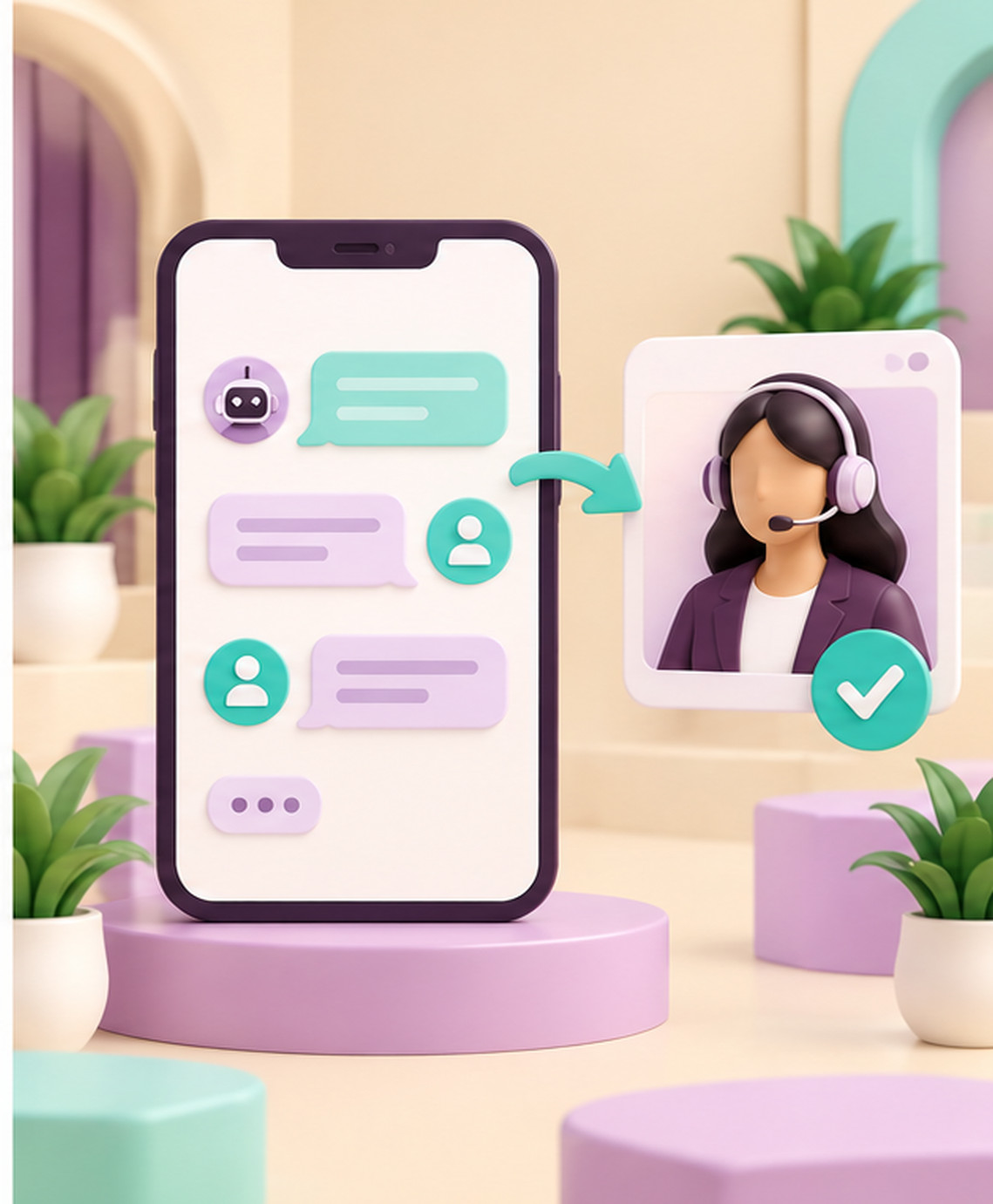
Ideally, customers should know when they're interacting with an automated assistant and have a clear way to request a human representative.
When a conversation is transferred, employees should have access to the relevant and appropriately shared context so customers don't have to repeat everything.
The purpose of AI is to support employees, not eliminate their role.
7. How Can You Get Started Without Investing in an Unnecessarily Complex System?
Not every business needs an advanced AI assistant from day one.
A practical approach starts with a few manageable steps.
First: Identify your most common questions.
Review inquiries about prices, working hours, products, delivery, and services.
Second: Decide which questions can be answered automatically.
Start with clear, approved information and leave complex cases to your employees.
Third: Prepare a reliable information source.
Keep prices, policies, and service details up to date. Define questions the assistant must not answer without employee involvement.
Fourth: Test the experience before launch.
Use realistic customer questions with different wording, dialects, spelling mistakes, and unexpected requests.
Fifth: Enable human escalation.
Define when a conversation should be transferred, who should handle it, and what happens outside working hours.
Sixth: Review the results and improve.
Start with a limited scope. Once the process works reliably, evaluate whether CRM or order management integrations would add value.
8. How Do You Measure AI Customer Service Success?
Don't focus only on the number of conversations handled.
Instead, measure performance indicators related to customer experience and business results, such as:
Average first response time.
Percentage of inquiries receiving a useful answer.
Number of qualified leads captured.
Percentage of conversations requiring human assistance.
Percentage of inquiries resulting in actual orders or bookings.
Customer satisfaction with the experience.
It's essential to distinguish between sending an instant reply and actually resolving the customer's problem.
An assistant may respond in seconds, but if the answer is unhelpful or customers need to repeat their questions, the experience still needs improvement.
9. Common Mistakes to Avoid Before Implementing AI
One major mistake is connecting an assistant to outdated or inaccurate business information.
Another is allowing it to promise discounts, delivery times, or product availability without checking an authoritative source.
Businesses must also protect customer information and avoid collecting more personal data than necessary.
Not every business needs an AI assistant operating continuously. For a small number of simple inquiries, quick replies and an organized human team may be sufficient.
The right decision depends on inquiry volume, question complexity, operating costs, and the actual value delivered to customers.
Conclusion: Fast Responses Matter, but Helpful Responses Matter More
Improving customer communication doesn't mean replacing your employees with robots.
It means helping customers find the information they need and allowing your team to focus on inquiries that require real expertise and human attention.
AI can be useful for organizing inquiries, answering repetitive questions, and improving lead follow-up when it's implemented thoughtfully.
At ONDM, we see websites, customer communication tools, and business automation as connected elements of the customer experience. Every technical solution should address a real business need.
Before investing in an AI assistant, review how your business receives and handles customer inquiries. Identify where delays, repetitive tasks, or missing information occur, then choose the simplest solution that effectively addresses the problem.
References and Sources
WhatsApp for Business — Business Messaging Policy (September 2026)
https://whatsappbusiness.com/policy/WhatsApp for Business — Business App Features
https://whatsappbusiness.com/products/business-app-features/WhatsApp Help Center — How to Set Up Meta Business Agent
https://faq.whatsapp.com/1153795669452207/Meta — Introducing Business AI on WhatsApp for Small Businesses
https://about.fb.com/news/2026/05/introducing-business-ai-on-whatsapp-for-small-businesses-in-india/Google Cloud — Dialogflow CX Human Handoff
https://docs.cloud.google.com/gemini-enterprise-cx/agent-assist/handoff-cx
Related blogs
View all blogs
؟Website Builder or Custom Development
Website builder or custom development? Compare costs, flexibility, maintenance, and scalability to choose the right solution for your business before investing.

Does Your Business Really Need a Mobile App? When Is It Worth the Investment?
Does your business really need a mobile app, or is a website enough? Discover when investing in an app makes sense, how the options compare, and how to choose the right solution for your customers and budget.

Getting Website Traffic but No Sales? Your Ads Might Not Be the Problem!
Getting website traffic but no sales? Discover how landing pages, user experience, website speed, and conversion tracking affect your results—and what to improve before increasing your advertising budget.