
؟Website Builder or Custom Development
Website builder or custom development? Compare costs, flexibility, maintenance, and scalability to choose the right solution for your business before investing.
You've decided to build a website for your business and started exploring your options.
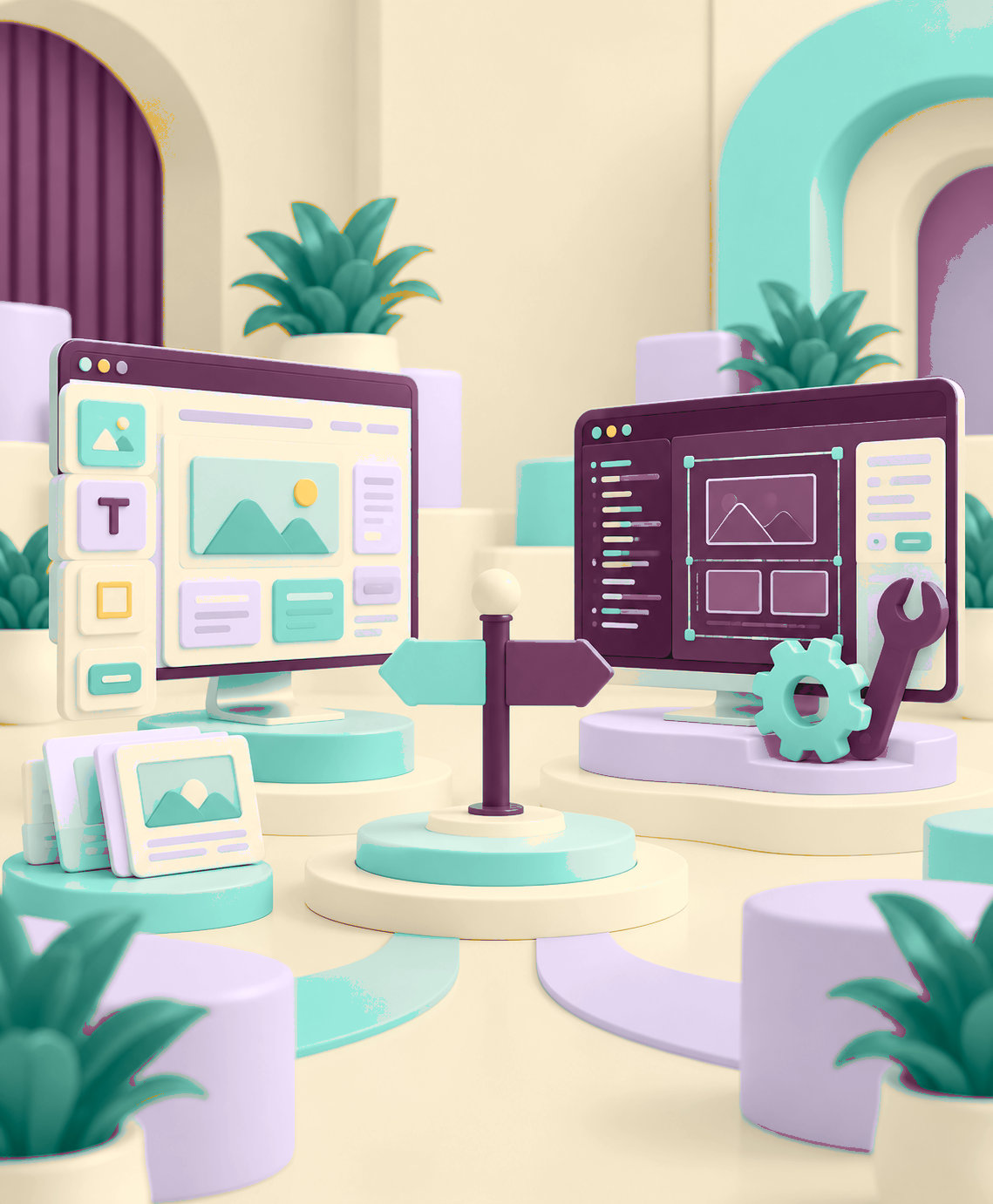
Some platforms promise a faster launch using ready-made templates and built-in features. Meanwhile, development companies offer websites customized around your specific business requirements.
With different prices and capabilities, an important question comes up:
Should you choose a website builder with a lower initial cost, or invest in custom development for greater flexibility?
There isn't one answer that works for every business. A simple website for a consulting company doesn't necessarily need the same technology as an advanced booking platform or a system that manages sales and internal operations.
To make the right decision, you need to understand the available approaches, identify what your business needs today, and consider what it might need as it grows.
1. What's the Difference Between a Website Builder and Custom Development?
Websites built using existing platforms
These websites rely on established systems that provide core functionality and customizable design templates.
Popular examples include Shopify, WordPress, and Webflow, although their hosting models, features, and customization options differ.
Some platforms combine hosting, website management, and e-commerce tools in a single subscription. Others allow you to manage your own hosting and technical environment.
The main advantage is that you don't have to develop every standard feature from scratch.
Custom-developed websites
Custom websites are designed and developed to meet specific business requirements.
Your company might need a unique booking system, an operations management dashboard, different employee permission levels, or specialized integrations with internal software.
Developers build or customize the required functionality around how the business actually operates.
However, custom development doesn't mean writing every line of code from scratch. Custom projects also use existing frameworks, libraries, and reusable components.
The real difference is how closely the solution is tailored to your business, not simply which technology it uses.
2. When Is a Website Builder the Better Choice?
For many businesses, an existing platform is a practical and effective solution.
When your requirements are straightforward
If your company needs to present its services, introduce its team, showcase previous work, and receive customer inquiries, a suitable content management system or website builder may cover everything you need.
You don't necessarily need a fully custom platform to publish service pages and contact forms.
When you need to launch quickly
Website builders provide existing templates and functionality, which can reduce setup time compared with developing a new system from the ground up.
However, the actual launch timeline still depends on content preparation, customization, and integrations.
When you're testing a new business idea
If you're launching a new business and still validating demand, an existing platform may let you release an initial version and collect customer feedback before investing in more advanced features.
The important thing is choosing a platform that genuinely supports your essential requirements, rather than selecting the cheapest option and discovering its limitations later.
3. When Does Custom Website Development Make More Sense?
Custom development becomes more valuable when your business requirements go beyond the typical functionality of existing platforms.
When your business has unique workflows
Imagine a company where each customer order passes through several stages and requires approvals from different departments.
You might need a dashboard specifically designed around these operations rather than changing how your company works to fit an existing system.
When you need specialized integrations
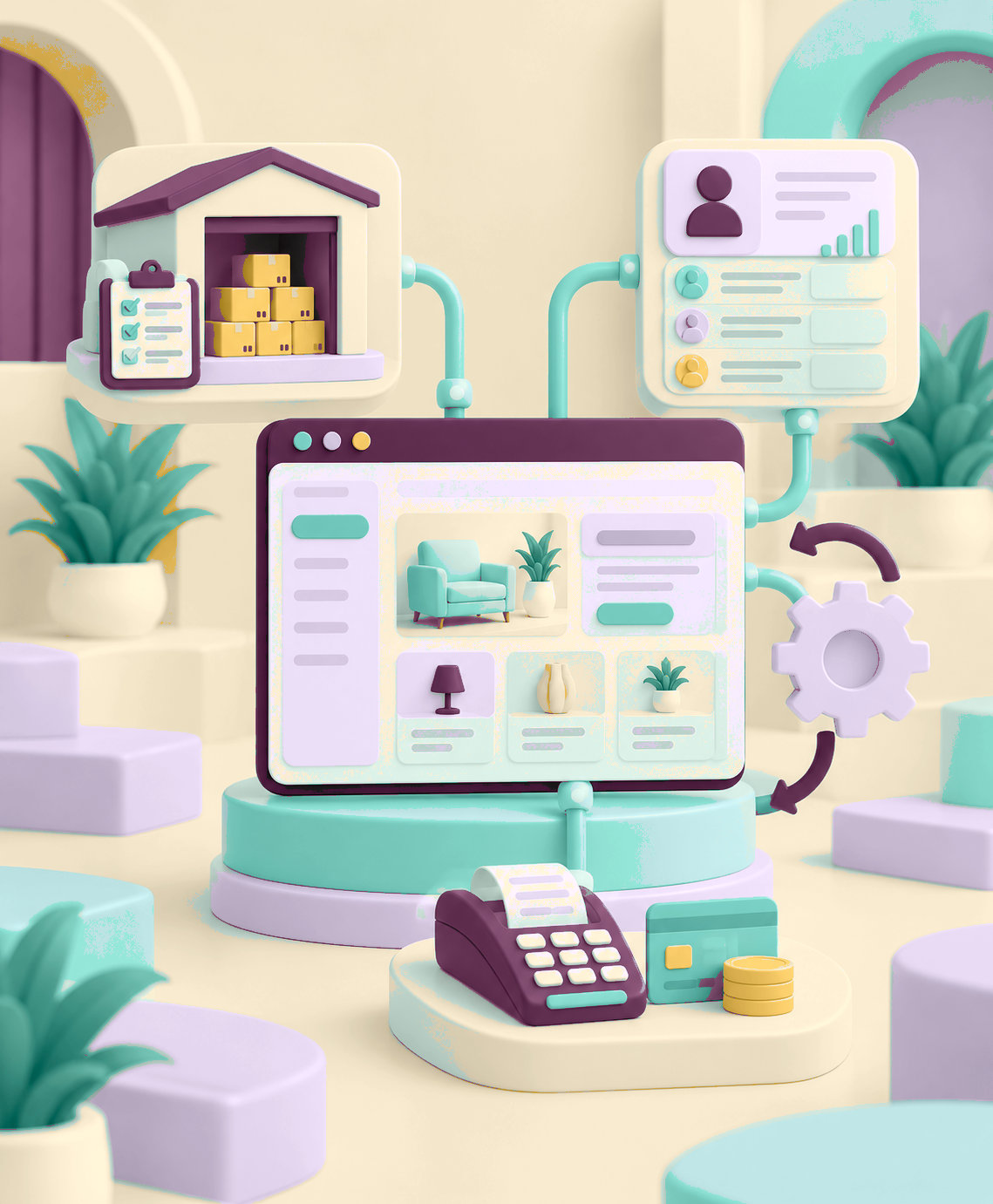
Some businesses need to connect their websites with inventory management, customer relationship management (CRM), accounting, payment gateways, or shipping systems.
Existing platforms already support many integrations through apps, plugins, and application programming interfaces (APIs).
However, if an integration isn't available or requires complex data processing, custom development may be more suitable.
When the website is the product itself
If you're creating a subscription platform, specialized online service, or marketplace with an unusual operating model, the website isn't simply a way to promote your business. It is a core part of the product you're selling.
In these situations, control over features, user experience, and long-term development becomes particularly important.
Still, not every new feature requires building an entire website from scratch. Customizing an existing platform can sometimes be more efficient.
4. Is a Website Builder Really Cheaper?
For straightforward projects, website builders often have a lower initial cost. But a fair comparison should include the entire period you'll operate the website.
An existing platform may involve:
Monthly or annual subscription fees.
Paid plugins or applications.
Design and customization expenses.
Transaction fees or third-party service charges, depending on the platform.
Additional maintenance and development costs.
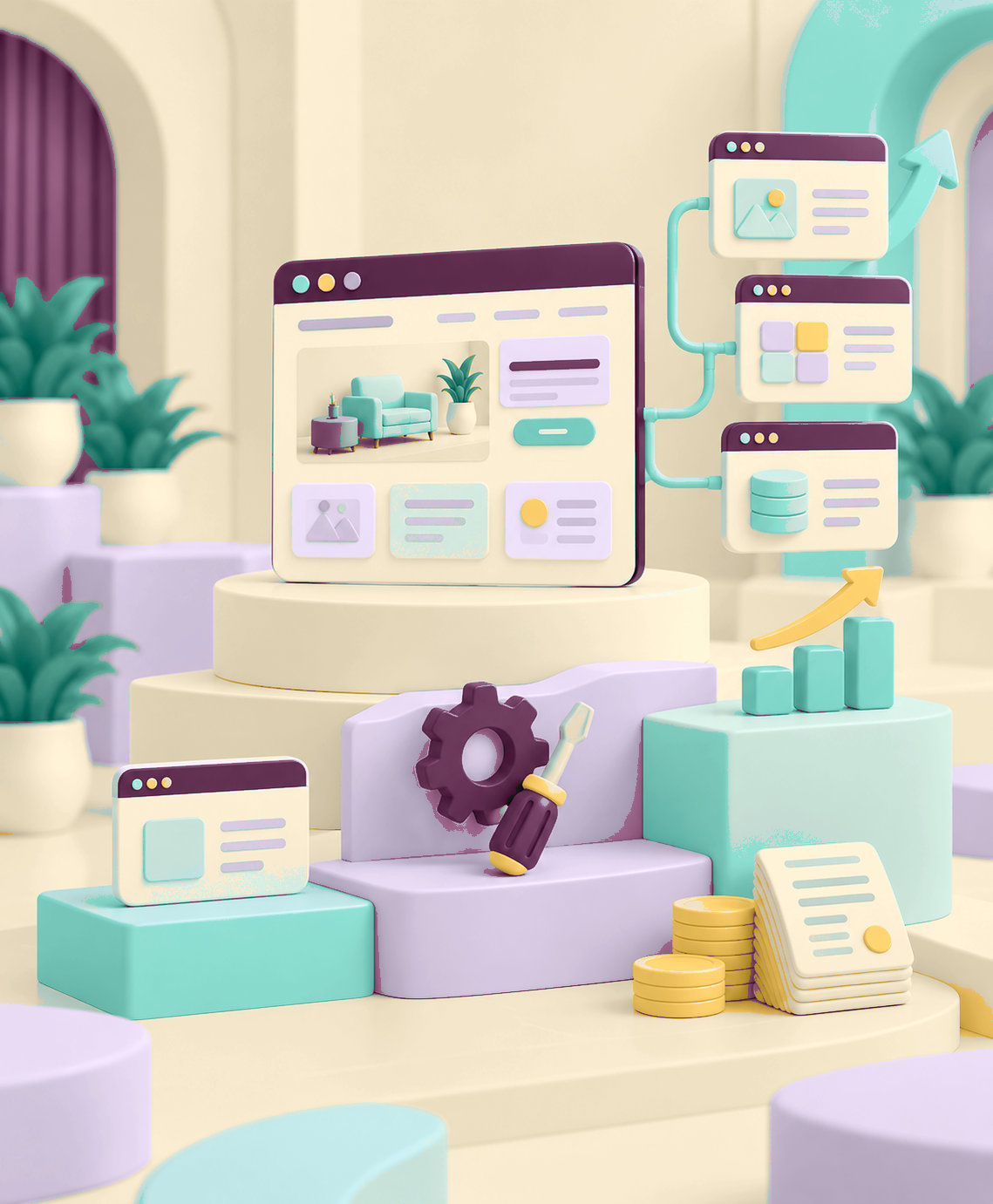
Custom development may involve:
Requirements analysis and user experience design.
Frontend and backend development.
Functional and integration testing.
Hosting and infrastructure.
Security, maintenance, and software updates.
Future feature development.
That means comparing the price of building a website against a platform's monthly subscription isn't enough.
A better approach is to compare the total cost of development, operations, maintenance, and future growth over two or three years.
A website builder may remain significantly more affordable for years. On the other hand, a highly specialized business may find that extensive platform workarounds make custom development more economical.
5. Are Custom Websites Automatically Faster, More Powerful, and More Secure?
Not necessarily.
Website speed depends on implementation quality, hosting, file optimization, database design, and how efficiently pages load, whether the site is built on an existing platform or developed from scratch.
Security also isn't guaranteed by the development approach.
An established platform can provide a secure environment when correctly configured and maintained. A custom website can still have serious vulnerabilities if development and testing are inadequate.
Likewise, custom development doesn't automatically guarantee the ability to handle large numbers of users.
Scalability requires appropriate architecture, performance testing, infrastructure planning, and ongoing monitoring.
The quality of implementation matters more than simply choosing a website builder or custom development.
6. Can You Expand or Move Your Website Later?
This is an important question to discuss before starting a project.
Some platforms allow you to export certain types of data. Open-source solutions may offer greater control over hosting and website files.
However, the ability to migrate an entire website depends on the system, plugins, database structure, and licensing conditions.
Not everything can necessarily be transferred easily, even when exporting products or content is possible.
Before committing, ask about:
Ownership of the domain and business accounts.
Export options for customer, product, and content data.
Ownership and licensing of custom code.
The ability to change hosting providers or development teams.
Potential migration costs.
Technical documentation and backups.
Your goal should be to keep the business flexible and avoid unnecessary dependence on a single provider.
7. Practical Examples: Which Solution Fits Your Business?
Professional services or consulting company
If your main goal is to present services, showcase previous projects, and collect inquiries, a website built with a suitable content management system will often be sufficient.
New online store
If you're selling standard products and need inventory management, payments, shipping, and order processing, evaluating established e-commerce platforms is a logical starting point.
If your business requires an unusual purchase journey, complex pricing rules, or specialized integrations, you may need extensive customization or custom development.
Academy or online learning platform
If you provide standard online courses, an established learning management system may be appropriate.
But if your business requires unique student cohorts, multi-stage programs, specialized reporting, or complex operational integrations, carefully evaluate customization capabilities before making a decision.
Business with complex internal operations
If you need a system connecting employees, tasks, approvals, and reports around unique procedures, a custom solution or highly configurable existing system may be the better choice.
In every example, the final recommendation depends on the project's actual requirements, not just the industry.
8. How to Choose Before Starting Development
Before signing a website development contract, answer these six questions.
First: What is the website's primary purpose?
Is it meant to present services, generate inquiries, sell products, or manage business operations?
Second: Which features are essential from day one?
Identify the functions you cannot launch without and separate them from future improvements.
Third: Can an existing platform support your requirements?
Evaluate actual features, integrations, and technical limitations rather than relying only on marketing demonstrations.
Fourth: What is your total budget?
Include development, subscriptions, hosting, maintenance, and potential future customization.
Fifth: What are your growth plans?
Will you need more branches, employees with different permissions, or integrations with new systems?
Sixth: Who will manage the website after launch?
Make sure your team can update content and manage daily operations, with clearly defined responsibilities for maintenance and technical support.
Once you have these answers, you can compare an existing platform, a customized platform, and a fully custom solution on a more realistic basis.
Conclusion: The Best Website Isn't Necessarily the Most Expensive
Choosing a website builder doesn't mean settling for an unprofessional solution. And custom development doesn't automatically mean receiving a better website.
The right approach depends on your business model, required features, budget, and future plans.
If an existing platform meets your needs, there's no reason to pay for unnecessary development.
If your business has specialized workflows or functionality, forcing those requirements into an unsuitable platform may create additional complications and costs later.
At ONDM, we begin by understanding the business and its users before recommending a technical solution, whether that means using an established platform or developing customized functionality.
Before investing in a new website, define what you want to achieve and evaluate your options based on cost, flexibility, and long-term sustainability—not just the technology name or initial price.
References and Sources
Shopify — Ecommerce Website Development: A Complete Guide (2026)
https://www.shopify.com/blog/ecommerce-website-developmentShopify — How to Make a Website to Sell (2026)
https://www.shopify.com/blog/how-to-make-a-website-to-sellWordPress.org — About WordPress and Open Source
https://wordpress.org/about/WordPress.org — WordPress.org vs. WordPress.com
https://wordpress.org/documentation/article/difference-between-wordpress-org-and-wordpress-com/WooCommerce — REST API Documentation
https://woocommerce.com/document/woocommerce-rest-api/Google Search Central — Mobile-first Indexing Best Practices
https://developers.google.com/search/docs/crawling-indexing/mobile/mobile-sites-mobile-first-indexing
Related blogs
View all blogs
Does Your Business Really Need a Mobile App? When Is It Worth the Investment?
Does your business really need a mobile app, or is a website enough? Discover when investing in an app makes sense, how the options compare, and how to choose the right solution for your customers and budget.
AI Customer Service.
Losing potential customers because of slow responses? Discover how AI customer service can answer inquiries, organize leads, improve customer experiences, and support your sales team without replacing human interaction.

Why Do Customers Add Products to Their Cart but Never Complete the Purchase?
Customers adding products to their carts but leaving without buying? Discover the main causes of cart abandonment and practical ways to improve checkout, reduce friction, and recover potential sales.